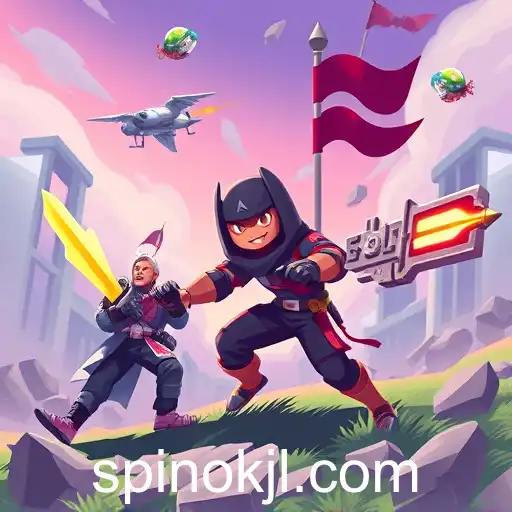
okjl | Exploring the World of Multiplayer Games: Building Connections and Communities

In the ever-evolving landscape of digital entertainment, multiplayer games have carved out a significant space that continues to grow in popularity and complexity. These games offer players the chance to connect with others globally, transforming video gaming into a communal experience rather than a solitary pursuit.
The primary feature that distinguishes multiplayer games from single-player games is the ability for multiple people to play simultaneously, often interacting within a shared virtual environment. This interaction can take place in various forms, such as cooperative gameplay, competitive matches, or massively multiplayer online games (MMOs), which host thousands of players in continuously evolving worlds.
The origins of multiplayer gaming can be traced back to the early days of video game arcades, where players would meet in person to compete for high scores. As technology advanced, so did the scope and capabilities of multiplayer games. The advent of the internet and broadband connections in the late 1990s and early 2000s catalyzed a shift towards online multiplayer games, allowing players to connect regardless of geographical location.
Today, platforms such as Steam, Xbox Live, and PlayStation Network have fostered vibrant communities where players can engage in a diverse array of games spanning genres like first-person shooters, strategy games, and role-playing games. Games like 'Fortnite', 'League of Legends', and 'World of Warcraft' have not only become cultural phenomena but also lucrative entertainment franchises.
Besides entertainment, multiplayer games have profound implications for social interaction. They create environments where players form friendships, join clans, and participate in competitive eSports tournaments. These virtual communities often extend beyond the game itself, with fan forums, social media groups, and live-streaming platforms like Twitch and YouTube providing spaces for discussion and engagement.
Moreover, multiplayer gaming has adapted to include innovations such as cross-platform play, allowing users on different gaming systems to compete against or cooperate with each other. This flexibility has only broadened the appeal and reach of multiplayer games.
However, alongside their many benefits, multiplayer games have also faced challenges. Issues such as gaming addiction, online harassment, and the digital divide have sparked important discussions about the responsibilities of developers and players alike. In response, many companies are actively working on solutions, such as implementing moderation tools and encouraging positive online interactions.
In summary, multiplayer games have moved far beyond their origins, now serving as a significant means of entertainment and socializing in the digital age. As technology continues to advance, these games will likely evolve further, continuously reshaping how players interact with each other and the virtual landscapes they explore.
Unraveling the Charm of Puzzle Games: A Deep Dive
Explore the world of puzzle games, uncovering their appeal, variety, and impact on cognitive skills.
Evolving Gaming Trends in the Digital Age
An exploration of the evolving landscape of gaming in 2025, influenced by technological advancements and community dynamics.
Gaming Trends and Innovations in 2025
Exploring the latest trends and innovations in the gaming industry, with a focus on the popular English game website okjl.
Gaming Boom Sparks New Innovations in Online Platforms
An overview of how the digital gaming landscape is evolving in 2026, with a focus on community-driven platforms like 'okjl'.